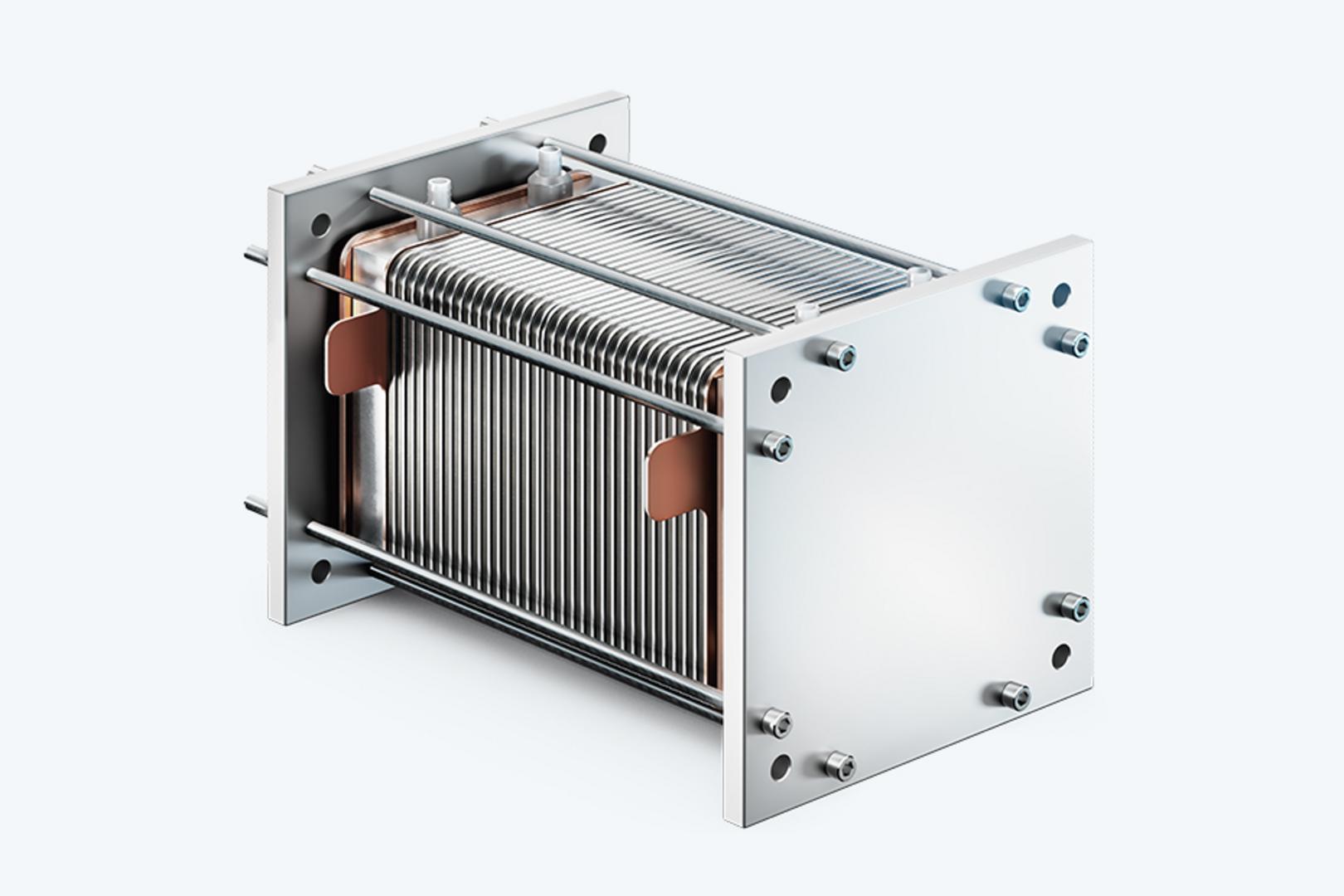
Taking material development into account at an early stage is of key importance for cost-effectiveness, safety and the long-term reliable operation of electrochemical energy storage systems, for both stack architectures and cell chemistries.
Two examples from the field of redox flow batteries demonstrate how Wevo, as a development partner for battery materials, provides tailor-made solutions to enhance manufacturing efficiency and technological performance.
Sealing redox flow batteries: material concepts for tubular stack architectures
As part of research into the cost-effective manufacture of tubular redox flow batteries conducted by the Competence Center for Energy Transition (CC4E) at Hamburg University of Applied Sciences (HAW Hamburg), Wevo supported the “TuRoX” project both financially and by providing specially optimised material systems.
The project built on polyurethane and epoxy potting compounds, which had originally been developed for planar battery stacks. These had to be adapted to the process and geometric requirements for the tubular design. In addition to chemical resistance to the vanadium electrolyte, attention was therefore focused on the rheological properties of the liquid sealants.
Unlike in planar stack designs, where the material is applied as a continuous bead onto the bipolar plate or flow frame prior to assembly, tubular redox flow batteries require it to be dispensed directly around cylindrical current collectors following partial assembly. During application, the sealant must therefore remain sufficiently fluid to completely wet the area to be sealed. The viscosity must then increase rapidly to prevent any penetration into the electrolyte channels. To ensure leak-free operation, Wevo has also optimised adhesion to the various cell substrates.
Chemical stability of materials in organic redox flow systems
Redox flow batteries using vanadium electrolytes are currently the most well-researched and deployed. At the same time, intensive work is being carried out worldwide on alternative cell chemistries. Organic electrolytes based on molecules such as anthraquinone derivatives are regarded as a promising approach. In some electrolyte systems, the organic molecules are dissolved in a sodium or potassium hydroxide solution, resulting in high pH values of 13 to 14, which places stringent demands on the material resistance of adhesives, sealants and potting compounds.
In the course of various customer projects, Wevo has developed liquid sealants designed for use with organic electrolytes, which are engineered to offer high chemical and thermal resistance. Swelling and chemical degradation upon contact with alkaline electrolytes are largely prevented.
In addition, Wevo material systems can be processed using partially or fully automated, scalable production techniques such as dispensing or screen printing. Thanks to their component-specific and PFAS-free formulations, these sealants, adhesives and potting compounds offer an alternative to FKM (fluoroelastomers), which are still frequently used.
Their specially optimised properties make Wevo material systems well suitable solutions not only for the stack but also for other components of electrochemical energy storage systems – such as sensors, pumps, power electronics or housings. In addition, Wevo is working on various industrial projects to further develop potting compounds, adhesives and sealants for use in redox couples such as iron/chromium, zinc/bromine and hydrogen/bromine, as well as in innovative flow batteries based on microemulsions.
Material development for electrochemical storage systems
The development of battery systems for electric vehicles, stationary energy storage and industrial applications takes place at the interface of various disciplines – precisely tailored materials are essential in view of the challenging environmental and operating conditions as well as the increasing automation of manufacturing processes. Upon request, Wevo supports projects right from the early stages – from the selection of suitable material systems through to application-oriented validation – and thus contributes to technological progress with its decades of expertise.